


Cookie Notice
PapiBet uses cookies to improve your experience and comply with legal requirements. For more information, please see our Cookie Policy. By clicking "Accept" or continuing to browse, you agree to our use of cookies.
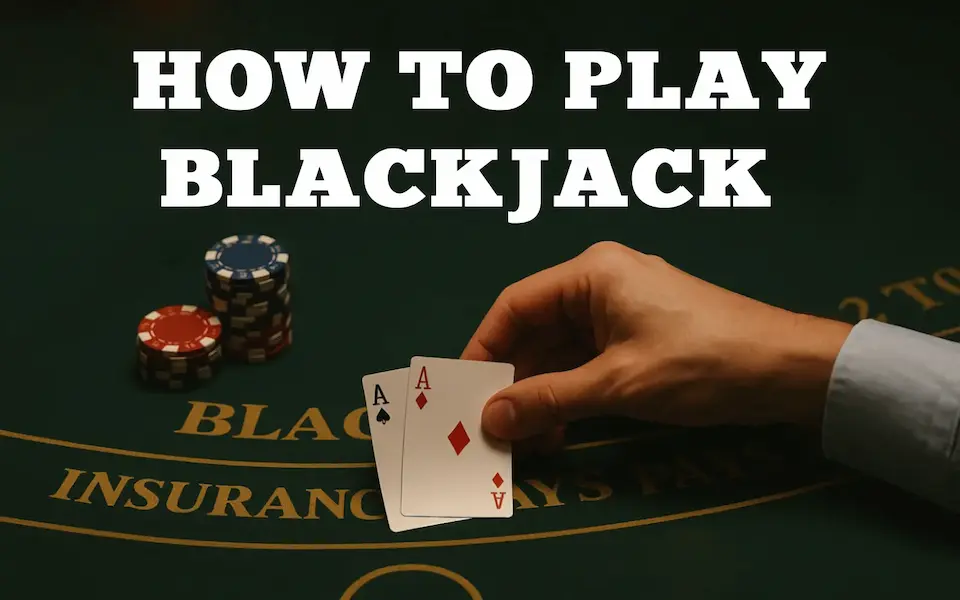
Blackjack is the table game that blends chance with choice. Unlike pure luck games, your decisions—when to hit, stand, double, or split—directly influence outcomes. That mix of control and simplicity is why blackjack has stayed at the center of every online casino and live pit for decades.
At PapiBet, you can enjoy fast RNG tables or step into live dealer casino games that stream in real time with professional dealers. In this guide, you’ll learn the story behind blackjack, the rules, the key decisions, and beginner-friendly strategy so you can sit confidently at any table—digital or live.
Most historians trace blackjack to 17th-century France, where Vingt-et-Un (“twenty-one”) captivated salons and early gaming houses. The goal sounded familiar: get close to 21 without going over, with the Ace counting as 1 or 11.
French settlers carried Vingt-et-Un to North America. Early gambling halls promoted the game with a special payout: if your first two cards were an Ace of Spades plus a black Jack (spades or clubs), you got a premium bonus. The bonus faded, but the name “blackjack” stuck.
As casinos formalized rules, mathematicians analyzed the game. “Basic strategy” emerged—an optimal set of decisions based on your hand and the dealer’s upcard. The message was clear: play smart and you shrink the house edge dramatically. Card counting stories later fueled pop culture, but casinos adapted; today, your safest edge is simply solid fundamentals, bankroll discipline, and smart table selection.
Also Refer to Article: Most Popular Casino Games online.
Number cards (2–10): face value
Face cards (J/Q/K): 10
Ace: 1 or 11 (whichever helps your hand)
A blackjack (Ace + 10-value card on the first two cards) typically pays 3:2. Some tables pay 6:5—avoid those when possible, as they lower your long-term value.
• Place your bet.
• Initial deal: you receive two cards; the dealer gets two (one face up).
• Your turn: choose to hit, stand, double, split (pairs), or surrender (if allowed).
• Dealer’s turn: dealer draws to at least 17 (some rules require hitting soft 17; always check the table placard).
• Settle: closest to 21 without busting wins; equal totals “push.”
Rules change the edge: decks used (single/dual vs 6–8-deck shoes), whether the dealer hits/stands on soft 17, whether doubling after split is allowed, and whether late surrender exists. Small details, big impact—always read the rules before you play, especially at live casino tables.
Hit to draw another card, chasing a stronger total.
Stand when you believe your current total is strong relative to the dealer’s upcard.
Beginners often stand too soon on totals like 12–14 when the dealer shows strength (a 10). Basics: soft hands (with an Ace counted as 11) can afford more aggression; hard hands require caution.
You double your bet and take exactly one card. Doubling shines on totals that are strong after one card—10 or 11, especially against weak dealer upcards (e.g., dealer 4–6). It’s a cornerstone of value play.
When you’re dealt a pair, you can split into two hands (placing an extra bet). Simple starter rules:
Always split Aces and 8s.
Never split 10s.
2s/3s/6s/7s splitting depends on dealer upcard; check a blackjack basic strategy chart if available.
Late surrender lets you forfeit half your bet and end the hand. Sounds negative—but against powerful dealer upcards, it can be a smart long-run reduction in losses. If your table offers it, learn when to use it.
If the dealer shows an Ace, the table may offer insurance—a side bet that the dealer’s hole card is a 10. It’s usually a negative-EV wager for casual players. “Even money” is a form of insurance when you have blackjack; again, most players skip it.
You don’t need to memorize a huge matrix to start playing well. Use these easy, high-impact rules (and consider keeping a pocket basic strategy chart where allowed).
• 8 or less: Hit.
• 9: Double vs dealer 3–6; otherwise Hit.
• 10: Double vs 2–9; otherwise Hit.
• 11: Double vs 2–10; Hit vs Ace.
• 12–16: Stand vs dealer 2–6; Hit vs 7–Ace.
• 17+: Stand.
• A,2 / A,3: Double vs 5–6; otherwise Hit.
• A,4 / A,5: Double vs 4–6; otherwise Hit.
• A,6: Double vs 3–6; otherwise Hit.
• A,7: Stand vs 2,7,8; Double vs 3–6; Hit vs 9–Ace.
• A,8 / A,9: Stand.
Split: A,A and 8,8 (always).
Don’t Split: 10,10 and 5,5 (treat 5,5 as 10 and Double when appropriate).
Situational: 2,2; 3,3; 6,6; 7,7; 9,9—follow chart vs dealer upcard.
Also Refer to Article: 5 Common Blackjack Mistakes to Avoid at an Online Casino.
Session bankroll: set an amount you’re comfortable risking.
Unit size: 1–2% of your session bankroll per hand.
Pace: aim for 50–100 hands per session to let math work.
Pick a loss threshold (e.g., 30–40% of session bankroll) and a win goal (e.g., +50%). Hitting either target is a natural breakpoint. It preserves your budget and keeps emotions in check.
Pairs, 21+3, and other side bets add excitement. They usually carry higher house edges; treat them as entertainment, not your main plan.
Pros: Fast, always available, great for practicing Table Games decisions.
Cons: Less social; you set the pace (which can tempt over-betting—use discipline).
Pros: Real cards, human dealer, authentic casino atmosphere, social chat.
Cons: A bit slower (many players like that); mind the table’s minimum.
Portrait view offers quick taps; landscape gives more table space. Use strong Wi-Fi/data for smooth video. On live tables, place bets in the “Bet Now” window and avoid last-second changes.
Also Refer to Article: Live Casino Tips – Win More at Blackjack & Roulette the Smart Way.
Promos can extend your play. A casino welcome bonus is great for exploring, and cashback can soften swings. A few pointers:
• Read the bonus terms and conditions—blackjack often contributes less to casino wagering requirements than slots.
• Respect max bet while wagering rules to avoid voided wins.
• Look into the VIP Program if you’re a regular table player; perks like tailored reloads or support can add value.
RNG blackjack uses certified random number generator (RNG) systems. Approved providers undergo testing so outcomes remain unpredictable and fair.
Live studios are built for transparency—multiple camera angles, clear dealing protocols, and strict studio controls. It’s the closest thing to a real casino pit you can get online.
Prefer privacy and speed? Crypto is convenient for deposits and fast crypto withdrawals. Always confirm Deposits & Withdrawals Policy, double-check wallet addresses, and enable 2FA. For data concerns, see our Privacy Policy. For live play options, visit PapiBet’s Live Casino.
Going in blind leads to oversized bets and tilt.
Fix: Set unit size, stop-loss, and stop-win before you sit down.
Your decision depends on what the dealer shows.
Fix: Follow basic strategy guidelines that react to the upcard.
Hands like hard 12 vs dealer 10 need a Hit—standing is worse in the long run.
Fix: Memorize a few key hard/soft rules to avoid costly errors.
It looks protective but is usually negative-EV.
Fix: Skip insurance unless you’re following a specialized plan (not needed for beginners).
They pay less on natural blackjacks.
Fix: Prefer 3:2 payouts whenever available.
Blackjack: Ace + 10-value card on the initial two cards (usually 3:2 payout).
Hard Hand: No Ace counted as 11.
Soft Hand: An Ace counted as 11 (e.g., A-6).
Hit / Stand / Double / Split / Surrender: Player options on your turn.
Push: Tie with the dealer—your bet returns.
Bust: Your total exceeds 21.
Upcard: Dealer’s face-up card.
Shoe: Device holding multiple decks in a live game.
RNG: Random Number Generator; used in digital tables.
The best “strategy” is a healthy relationship with the game:
• Play for entertainment, not income.
• Use deposit limits, reality checks, and cool-off tools.
• If it stops being fun, take a break or stop.
Blackjack’s longevity isn’t an accident. The rules are simple, the decisions are meaningful, and the pace fits almost any mood. Now that you understand the basics—history, options, strategy, and etiquette—you’re ready to play with clarity instead of guesswork.
Start at PapiBet’s Live Casino tables or warm up on an RNG Blackjack Games to practice. If you’re claiming a casino welcome bonus, review casino wagering requirements first, then play at limits that feel comfortable. With smart choices and steady pacing, you’ll get the most from every session.

After a volatile start to 2025, Coinbase expects the crypto market to stabilize by June Casino casino Casino Casino Casino casino ...

Blackjack is the table game that blends chance with choice. Unlike pure luck games, your decisions—when to hit, stand, double...

Live casino games are the bridge between online convenience and real-world casino energy. Whether you’re playing live dealer ...

Blackjack is one of the most player-friendly casino games because decisions can actually improve your odds. Unlike slots, where ...

Whether you enjoy blackjack, roulette, baccarat, or poker, today’s online casinos offer two distinct ways to play. Two Ways to ...

Casino bonuses are one of the most exciting reasons to join an online casino — from welcome bonuses and free spins to cashback ...

Free spins are one of the most attractive perks in an online casino. They give players a chance to try new slot games, extend ...

Casino bonuses are one of the biggest advantages of playing at an online casino instead of a brick-and-mortar venue...

Casino bonuses are designed to enhance the online gaming experience — giving you extra playtime, more chances to win, softer ...

One of PapiBet’s biggest advantages is its crypto-only payments system — no banks, no credit card holds, and no long waiting ...

If you’re completely new to online gambling, you’re not alone. Every day, thousands of players join their first online casino ...

Roulette is the most iconic table game in any online casino. A spinning wheel, a bouncing ball, and a tapestry of bets give ...

Blackjack is the table game that blends chance with choice. Unlike pure luck games, your decisions—when to hit, stand, double....

More players than ever are turning to crypto casinos because they offer faster transactions, better privacy, and no banking ...

In the world of online casinos, player accounts contain more than just game history — they hold crypto balances, personal data ...

Nothing can ruin a gaming session faster than losing connection during a live dealer casino game — especially when you have a ...

Deposits are the first step in any online gaming experience — but they are also where most new players run into problems. Whether ...
After a volatile start to 2025, Coinbase expects the crypto market to stabilize by June Casino casino Casino Casino Casino casino ...
Blackjack is the table game that blends chance with choice. Unlike pure luck games, your decisions—when to hit, stand, double...
Live casino games are the bridge between online convenience and real-world casino energy. Whether you’re playing live dealer ...
Blackjack is one of the most player-friendly casino games because decisions can actually improve your odds. Unlike slots, where ...
Whether you enjoy blackjack, roulette, baccarat, or poker, today’s online casinos offer two distinct ways to play. Two Ways to ...
Casino bonuses are one of the most exciting reasons to join an online casino — from welcome bonuses and free spins to cashback ...
Free spins are one of the most attractive perks in an online casino. They give players a chance to try new slot games, extend ...
Casino bonuses are one of the biggest advantages of playing at an online casino instead of a brick-and-mortar venue...
Casino bonuses are designed to enhance the online gaming experience — giving you extra playtime, more chances to win, softer ...
One of PapiBet’s biggest advantages is its crypto-only payments system — no banks, no credit card holds, and no long waiting ...
If you’re completely new to online gambling, you’re not alone. Every day, thousands of players join their first online casino ...
Roulette is the most iconic table game in any online casino. A spinning wheel, a bouncing ball, and a tapestry of bets give ...
Blackjack is the table game that blends chance with choice. Unlike pure luck games, your decisions—when to hit, stand, double....
More players than ever are turning to crypto casinos because they offer faster transactions, better privacy, and no banking ...
In the world of online casinos, player accounts contain more than just game history — they hold crypto balances, personal data ...
Nothing can ruin a gaming session faster than losing connection during a live dealer casino game — especially when you have a ...
Deposits are the first step in any online gaming experience — but they are also where most new players run into problems. Whether ...


PapiBet.com is operated by Genesis Enterprise Ltd, registration number 15915, with its registered address at PO Box 1212, Hamchako, Mutsamudu, Autonomous Island of Anjouan, Union of Comoros. Genesis Enterprise Ltd is licensed and regulated by the Government of the Autonomous Island of Anjouan, Union of Comoros under License No. ALSI-202503002-FI1. Gaming is intended for entertainment purposes only. Gambling involves risk and may result in financial loss. Players must be 18 years of age or older and are responsible for ensuring that online gambling is legal in their jurisdiction. Please gamble responsibly. For more information, please visit our Regulations page.

Cookie Notice
PapiBet uses cookies to improve your experience and comply with legal requirements. For more information, please see our Cookie Policy. By clicking "Accept" or continuing to browse, you agree to our use of cookies.